A tour of the web app
Every page in the web app, in the order you'll actually use them — from the dashboard to Charyl Proposals.
By the end of this guide you’ll know what every page in the web app is for and roughly where to find it — from the dashboard you land on first to the page where you approve what Charyl has drafted. Nothing here needs a smart home or a subscription; most of it is there the moment your home’s box is set up.
The dashboard is home base
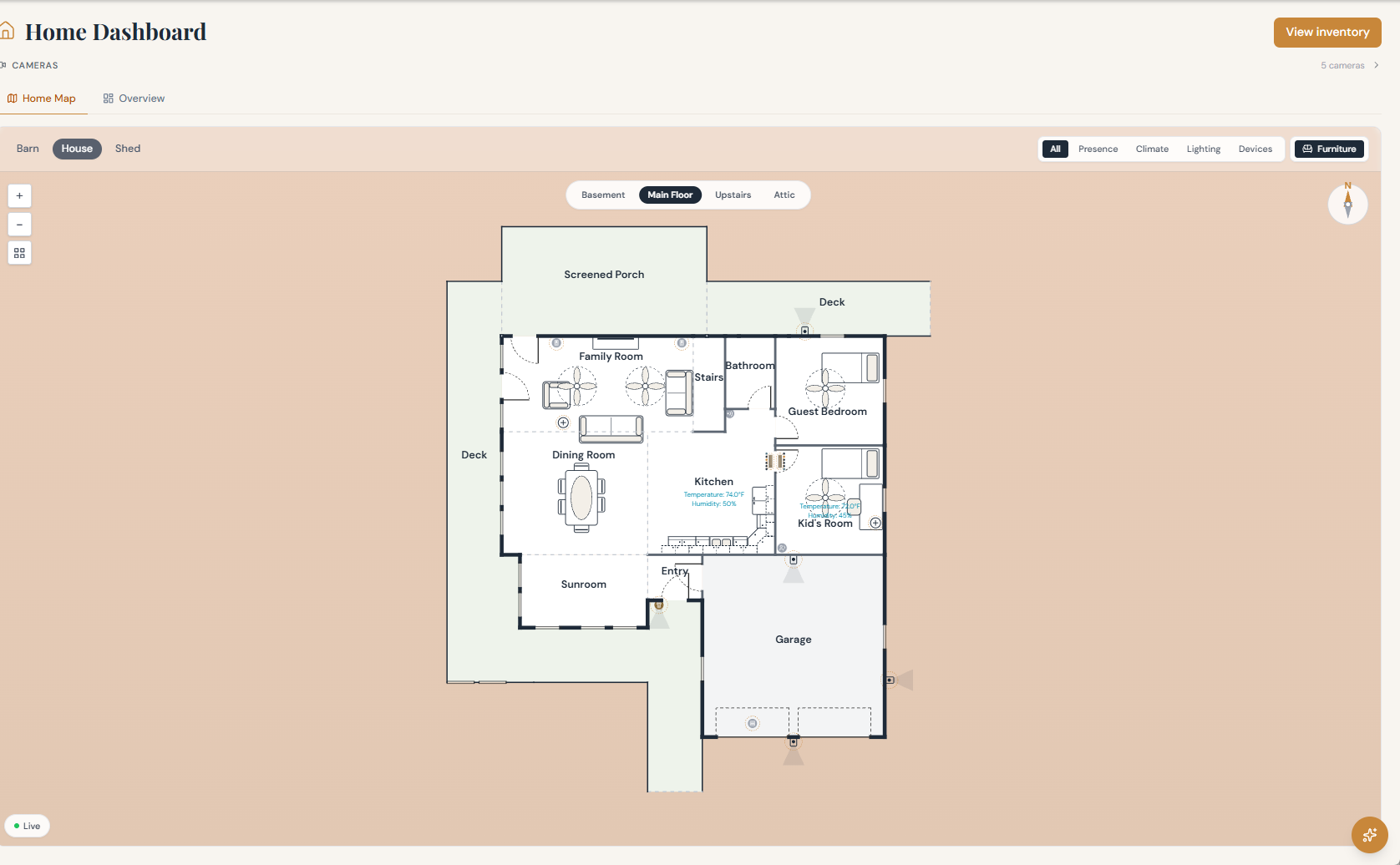
Everything starts at the dashboard, and it has two views. Home Map lays your rooms out as a floor plan — switch between buildings if your property has more than a house (a barn or a shed), move between floors, and filter what’s shown to presence, climate, lighting, or devices; a furniture toggle adds the pieces placed in each room.
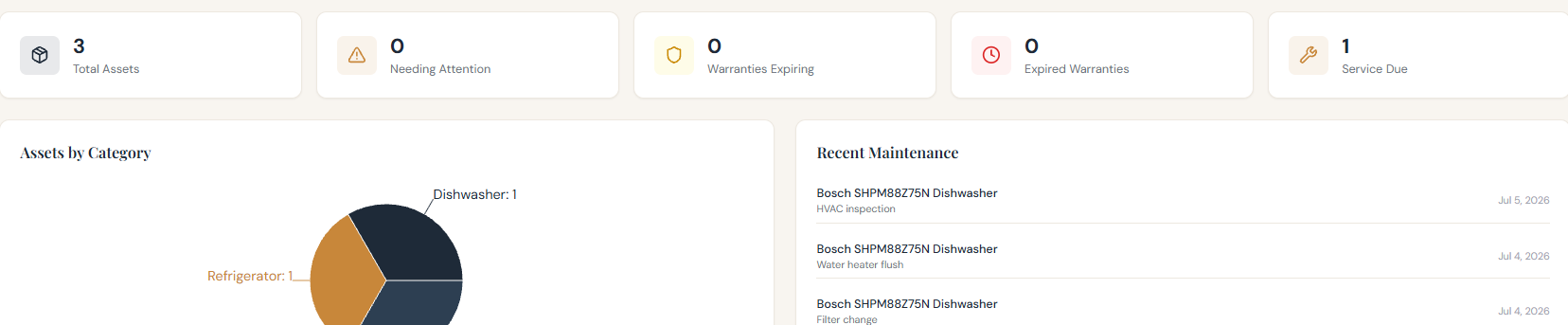
Overview trades the floor plan for numbers: total assets, items needing attention, warranties expiring and warranties already expired, service due, a category breakdown, and your most recent maintenance.
Your inventory, warranty by warranty
Assets is the full record of what’s in your home — searchable, filterable, and open to add to directly if you’d rather type than photograph. Open any one item and you’ll find its attributes, its warranty, anything related to it, its maintenance history, and whatever documents are attached to it.
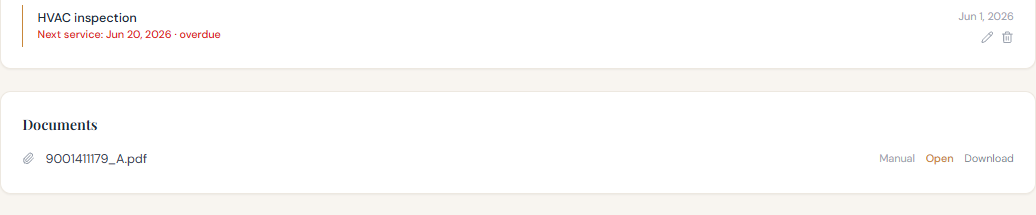
Warranties gives you the same information from the other direction — every warranty on file, across every asset, in one list, which is the page to open when you want the whole picture rather than one item at a time. Maintenance does the same for service history: what’s been done, and what’s coming due or already overdue across the whole home.
Rooms and floors
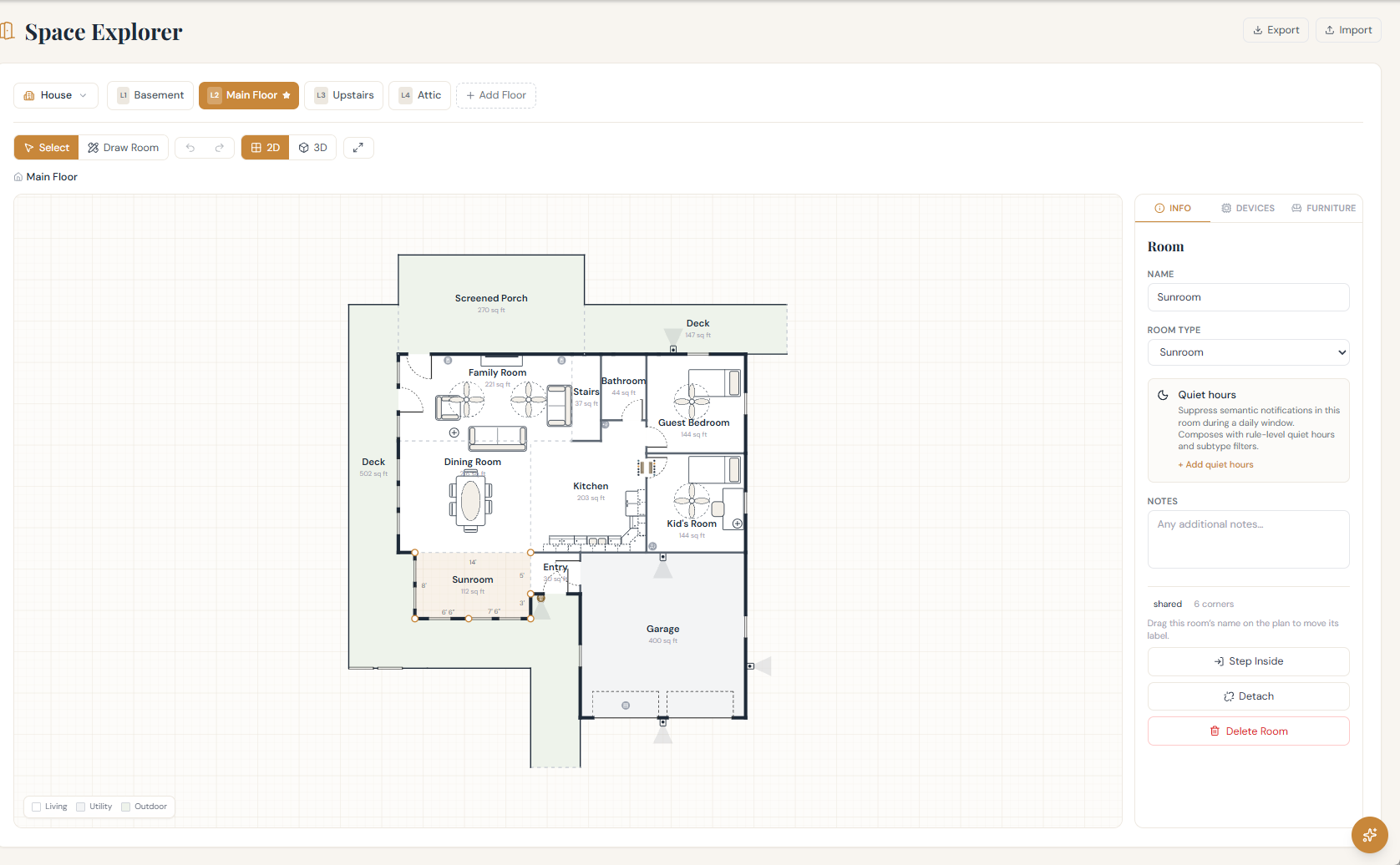
Space Explorer is where the floor plan you saw on the dashboard actually gets drawn. Lay out a room, switch between a flat 2D view and a 3D one, and see exactly which devices and furniture live in each space — including quiet hours, if you want a room to stay silent during a daily window regardless of what else is happening in the house.
Talking to her
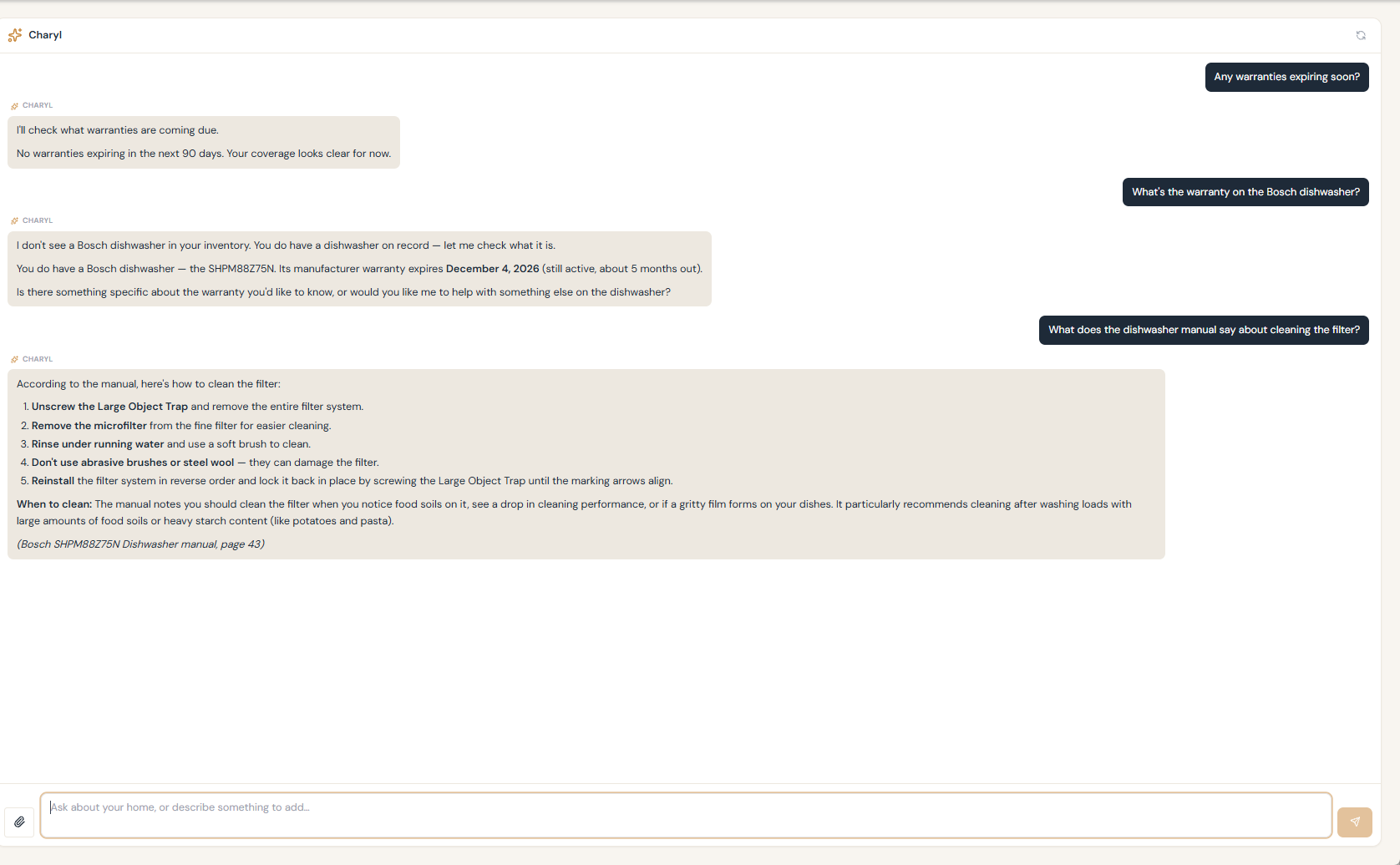
Ask Charyl is a full page of its own, and the same conversation is also available as a dock that follows you on every other page in the app — so asking a question never means leaving what you were doing.
Reviewing what she’s drafted
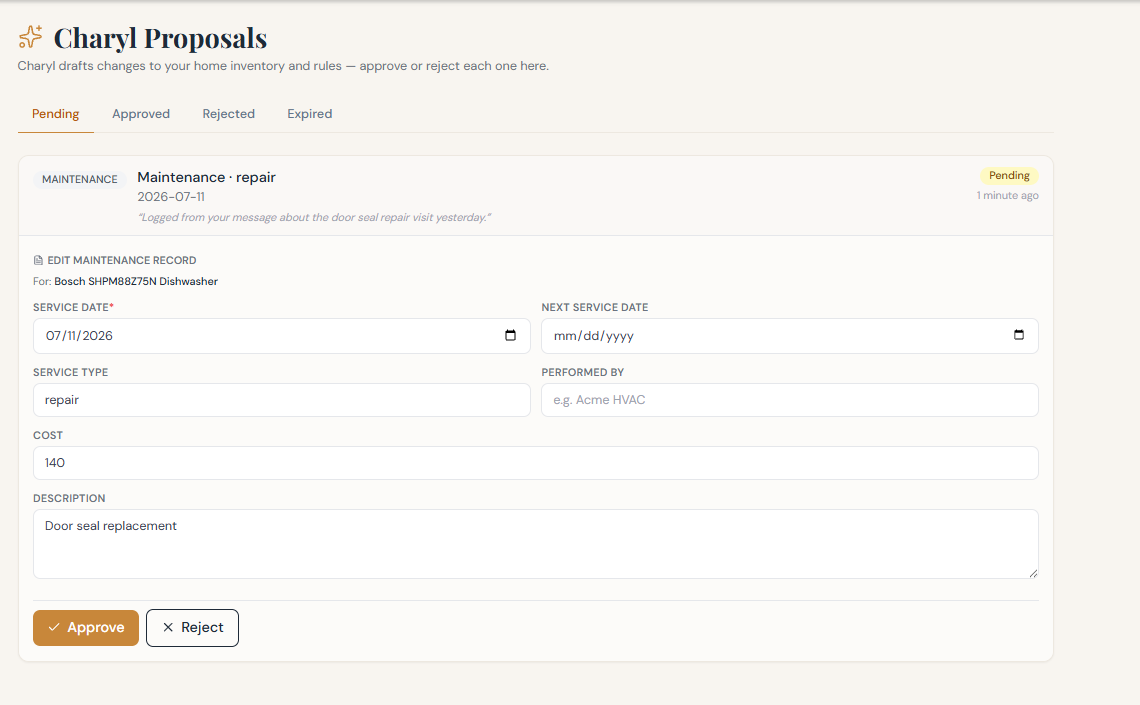
Charyl Proposals is where every record she drafts — a new appliance, a warranty, a logged repair — waits for you. Each one is sorted into Pending, Approved, Rejected, or Expired, and a pending card shows exactly what she’s proposing before you approve or reject it.
The smart home
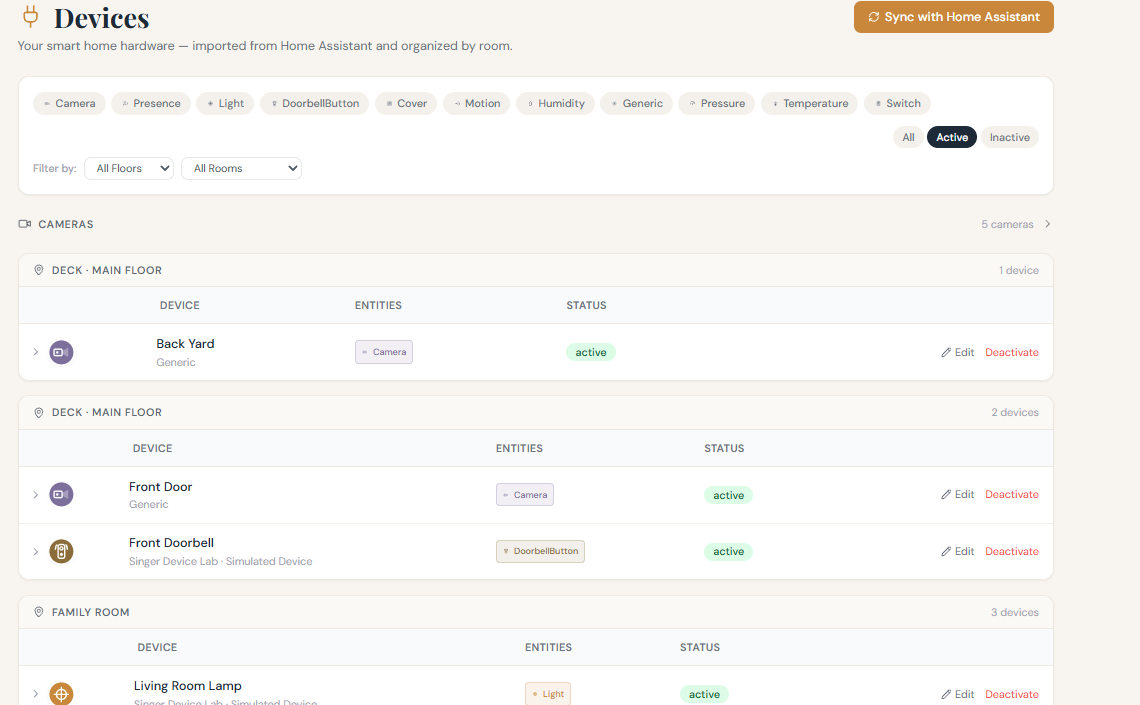
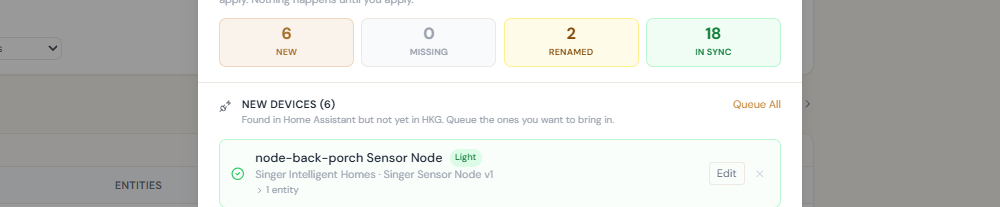
Devices lists your smart-home hardware, imported from Home Assistant and grouped by room, with filters for device type and for active versus inactive. The Devices page has a Sync with Home Assistant button for pulling in changes since setup.
Cameras gives each camera on the property its own page, with a snapshot and a live view.
Records and help
Home Records holds the paperwork that governs the property itself — insurance, HOA documents, your deed, permits — kept apart from the things inside it. Service Providers is the people you’d call: whoever you already have on file, plus a researched directory with Charyl Cloud.
Keeping tabs
Dashboards is a drag-and-drop builder for your own cards — sensors, devices, whatever you want to see at a glance, arranged how you want it. Metrics turns your sensor history — temperature, humidity, and the rest — into charts over time. Activity is a running log of what’s changed in your home’s record, and Actions is where notification rules get authored: what should tell you what, and when. Notifications is your own inbox for everything the home has told you, gathered in one place.
Settings, and one optional extra
Settings covers account and home configuration, including the space hierarchy itself. If your property includes a barn or another equine structure, an optional Intelligent Barn module adds stalls, a training diary, and life-safety alerting for the animals — it’s a separate, licensed piece of the product, not something every home has turned on.