Tips and tricks
Habits that make talking to Charyl faster and more reliable — naming things well, correcting her, and giving her something to remember.
Most of what makes Charyl useful day to day isn’t a hidden feature — it’s a handful of habits that make the difference between a clean answer and a frustrating one.
Be specific, and ask one thing at a time
Charyl works from what you actually tell her, the same as anyone would. “What do I own in the kitchen” gets a sharper answer than “tell me about my house,” and a message that asks three things at once is harder for her to act on cleanly than three short messages in a row. If you don’t remember what you called something, describe it — she can usually find “the dishwasher” without you naming its brand.
When she’s missing something she needs to answer well, she’ll ask you a single clarifying question instead of guessing. Answering it directly is almost always faster than starting the request over.
Name your rooms and things well
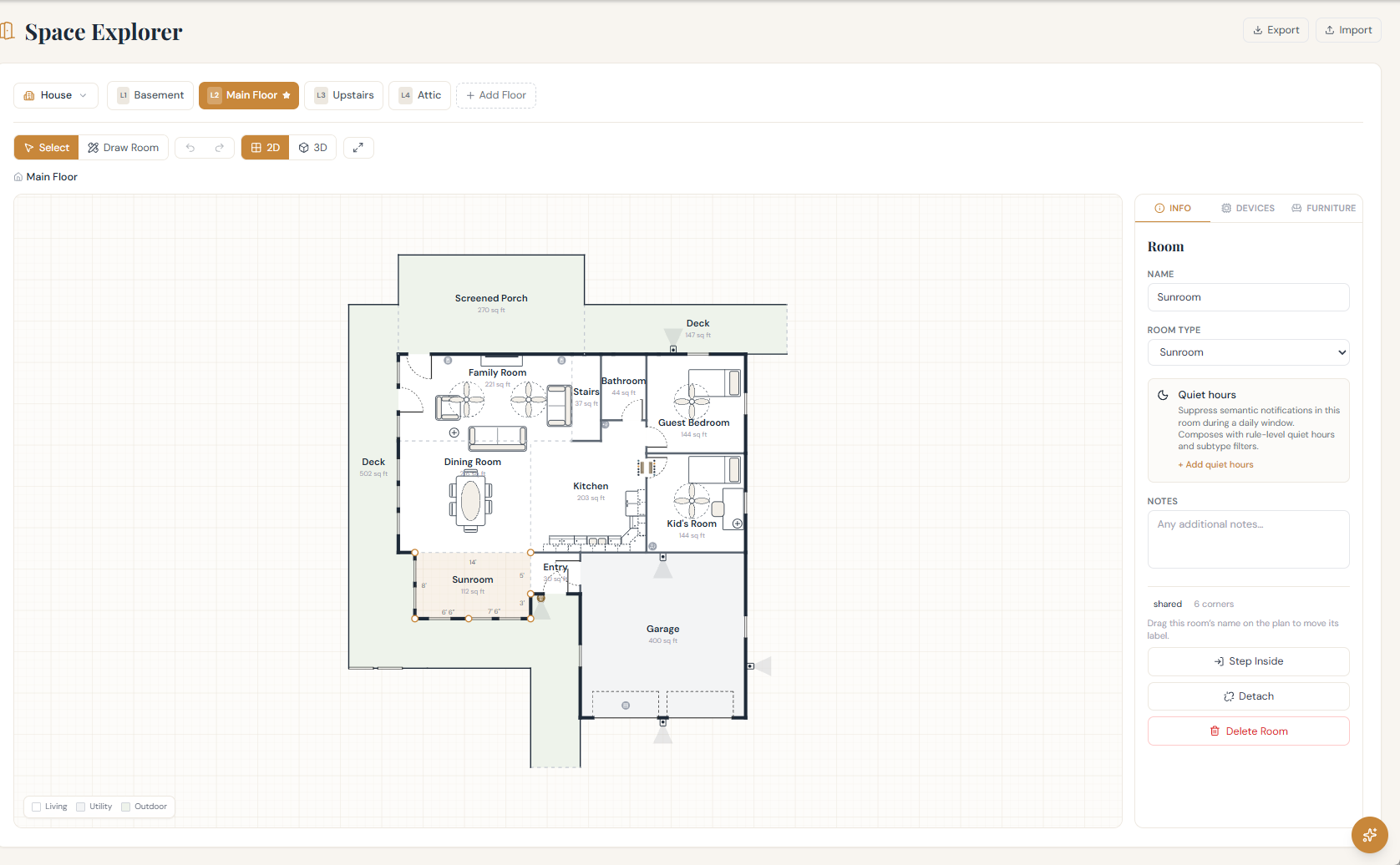
A surprising amount of what makes room-scoped questions work — “what’s in the primary bedroom,” “what was the average temperature upstairs” — comes down to how clearly your rooms are named. “Primary Bedroom” resolves reliably; “Room 3” doesn’t give her much to match against. The names you set in the home map are the same ones she listens for in chat, so a few minutes spent naming things well early pays off in every conversation afterward.
Let her draft — don’t expect an instant, finished answer
When you photograph a nameplate or describe something you’d like added to your home’s record, she researches it and drafts a proposal — she doesn’t save anything on her own. That draft is a starting point, not a guess she’s committing to: check it, fix anything that’s off, and approve it when it’s right. Nothing becomes part of your inventory without that last step from you.
Ask for the big picture, not just single facts
“How’s my home doing overall — anything I should deal with?” pulls together warranty counts, items needing attention, and overdue or upcoming maintenance in one answer, instead of you piecing it together from several separate questions. It’s worth asking every so often, not just when you already suspect something’s wrong.
Correct her when she’s wrong
If a detail is off — a date, a spec, a category — just tell her in plain language what should be true instead. “The expiration date should be March” is enough for her to draft the fix. If she hasn’t saved something yet, rejecting the proposal is often simpler than correcting it after the fact.
Give her something to remember
Example exchange reproducible
The furnace was serviced today. Same company as last time.
Charyl
Noted — I've drafted a maintenance record for the furnace and set the next service for a year out. It's in your proposals whenever you're ready to approve.
Illustrative — reproducible against what Charyl can do today; answers depend on your home's records.
Facts worth carrying across conversations — a preference, something in progress around the house — are worth telling her directly: “remember that I prefer temperatures in Celsius.” She’ll hold onto it until you ask her to forget it. She won’t remember anything you didn’t tell her yourself, and she won’t store a secret like a password or an alarm code even if you ask her to.
Attach documents instead of retyping them
If you have the actual document — a policy, a manual, a receipt — attaching it in chat is faster and more accurate than describing its contents from memory. A PDF can be filed as a new Home Record with one tap of confirmation; the details come from the document itself, not from what you remember about it.
Where to go next
Things to try is a grouped list of prompts you can use verbatim. If something breaks or feels off, Report bugs and request features covers /bug and /request.